
The Best Time to Visit the Waitomo Caves: Season, Day and Hour
There is no best month to see the Waitomo glowworms, and no operator here claims one. What actually moves through the year is the crowd, the departure board and the daylight on the road — and one of those decides whether your day works.

In this guide
- The cave does not have a season
- So why does the weather still matter?
- Summer, and the departures that sell out
- What does winter get you?
- Which departure time should you pick?
- Are the glowworms brighter after dark?
- New Zealand school holidays
- How far ahead should you book?
- What to wear underground, in any month
- Weather clauses, and what they actually cover
- How does the crowd change what you see?
- Does the season change the rest of the day?
- What actually changes month by month?
- Does rain affect the cave itself?
- Booking a slot that leaves room for the drive
The cave does not have a season
Start here, because it saves a lot of research. The show cave holds much the same temperature all year, there is no daylight in it, and the glowworms do not vary their display by month. It opens 9am to 5pm, seven days a week, and it runs departures through the day in July exactly as it does in January.
No operator claims a better month, and none of them varies a departure pattern seasonally. Anyone promising a peak glowworm season is describing something other than this cave.
So why does the weather still matter?
Because everything either side of the cave happens outdoors. The drive from Auckland is two and a half to three hours of road; Hobbiton is a walk across a working sheep farm; the Waitomo Caves Domain and the walk between the caves are all above ground.
Several operators state plainly that the tour operates in all weather and ask you to dress for it. A few carry a bad-weather clause, and it covers the surface stops rather than the cave.
Summer, and the departures that sell out
December to February is the New Zealand summer and the busiest period on the road. The consequence underground is capacity: the cave sells timed slots with a fixed maximum, and the middle of the day goes first.
Travellers who visited off season describe having the places almost to themselves, which is not something the cave can offer in January at midday.
What does winter get you?
Space, mostly. Quieter departures, easier slots, and a cave that is exactly as warm as it was in summer — which is to say cool, and cooler than the paddock above it.
What you give up is daylight for the drive. A 7:30am departure from Auckland in June starts in the dark, and the return leg finishes in it.
Which departure time should you pick?
Entirely a logistics decision, because the cave looks identical at every hour. What changes is your drive.
- Early morning: means leaving Auckland before six if you are driving yourself. Quietest inside.
- Midday: the slots that sell first, and the ones a guided tour usually holds.
- Mid-afternoon: a comfortable self-drive morning with a stop on the way, and space to spare on the check-in margin.
Are the glowworms brighter after dark?
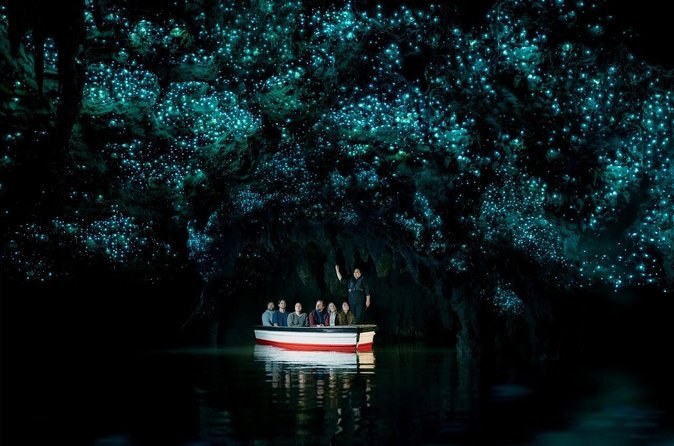
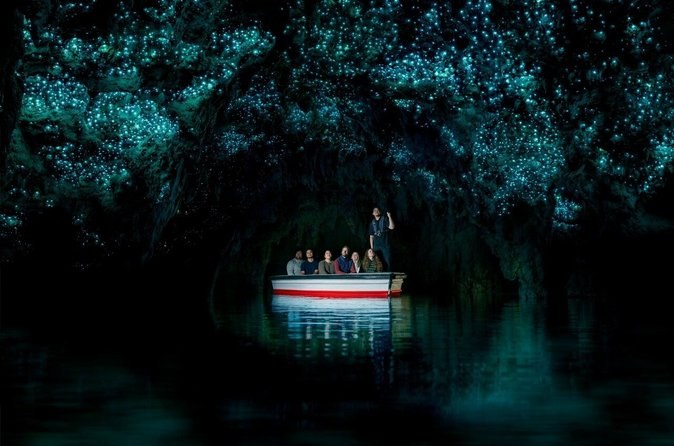
No, and there is no Waitomo Caves night tour to book because nobody sells one. The chamber is in complete darkness at every hour of the day, and the glowworms are responding to hunger rather than to a sky they never see.
The cave closes at 5pm, so no evening departure exists in any case. The display at eleven in the morning is identical to the display at four in the afternoon, which is not something an operator could change if it wanted to.
New Zealand school holidays
Domestic school holidays fill the middle-of-the-day slots faster than anything else, because Waitomo is a classic family day out for the whole upper North Island. Booking further ahead is the only adjustment worth making.
The tours themselves do not change. One small-group day trip sets a minimum age of five year-round — Waitomo with kids has the age limits by tour.
How far ahead should you book?
Far enough that you get the slot you want, which in practice means weeks rather than days in summer and days rather than weeks in winter. The 24-hour free-cancellation window on every tour makes early booking close to risk-free.
Book early, decide late. Holding a departure costs nothing until the day before it. The expensive mistake is the other one: arriving at a sold-out cave after three hours of driving.
What to wear underground, in any month
A warm layer and shoes you can walk in. Those are the operator's own two requests and they apply in February as much as in August, because the underground temperature does not track the surface.
Above ground, dress for a New Zealand day rather than for a cave: several operators note that the tour runs in all weather and there is walking at every stop.
Weather clauses, and what they actually cover
A few listings carry a bad-weather cancellation clause, offering an alternative date or a full refund if the operator cancels. Read them as covering the road and the outdoor stops rather than the cave.
Most operators go the other way and state that the tour runs in all conditions. The cave is indifferent to what is happening above it.
How does the crowd change what you see?
Less than you would think inside the cave, and more than you would think around it. The tour is capped at 23 travellers whatever the season, so a busy January departure and a quiet July one hold the same number of people. What fills up is the timetable, not the boat.
Where the crowd shows is the visitor centre, the car park and the wait between check-in and departure. Travellers who went off season describe having the place almost to themselves, and that is the difference: not a better cave, a calmer hour either side of it.
It also affects the guide. A guide running back-to-back departures through a summer afternoon has less room for questions than one with a half-full mid-week slot in June, and the guides are the part reviewers praise most.
Does the season change the rest of the day?
Yes, and more than the cave does. Almost every tour here pairs the caves with something outdoors, and those things are weather-dependent in a way the cave is not.
The Hobbiton Movie Set is a walk across a working sheep farm. It is beautiful in summer and muddy in winter, and one traveller on a private tour suggested reversing the itinerary specifically to avoid the afternoon heat. Rotorua’s geothermal parks are all outdoors as well, and Blue Spring is a walk.
So if you are booking a combination day, choose the season for the above-ground half. The cave will be the same either way, which for once makes the decision simple.
What actually changes month by month?
Not the cave. What changes is the queue, the daylight on the road and how far ahead you need to book. The table sets out the four variables that do move through a New Zealand year, against the one that does not.
| Season | Months | Booking pressure | Daylight for the drive | The cave itself |
|---|---|---|---|---|
| Summer | December – February | Highest; midday slots go first | Long; an early start is comfortable | Unchanged |
| Autumn | March – May | Easing through the season | Shortening; plan the return leg | Unchanged |
| Winter | June – August | Lowest; slots are easy | Short; both drives may be dark | Unchanged |
| Spring | September – November | Building towards summer | Lengthening again | Unchanged |
Seasons are New Zealand’s, so December is midsummer. The cave column is deliberately identical in every row: no operator here publishes a seasonal variation, and inventing one would be the easiest false claim to make about this cave.
Compare every Waitomo Caves tour
The one genuinely seasonal factor is domestic school holidays, which fill the middle of the day regardless of the month they fall in.
Does rain affect the cave itself?
Not in any way you will notice on a normal wet day. The stream running through the cave is fed from the surface, so heavy sustained rain raises it, but the operator manages that and it is not something a visitor plans around.
What rain does affect is everything else. Hobbiton is a walk across a farm; the path between the visitor centre and the cave is outdoors; and the drive gets slower. Several operators state that they run in all weather and ask you to dress for it, which is the correct instruction rather than a warning.
If the forecast is genuinely bad, the 24-hour cancellation window is the tool. Move the booking rather than sitting through a day you will not enjoy.
Booking a slot that leaves room for the drive
The single most common way a Waitomo booking goes wrong has nothing to do with the season. It is a departure time chosen without allowing for the 30-minute check-in on top of a three-hour drive.
Pick the slot backwards from your start point. If you are leaving Auckland at eight, do not book eleven. Drive times are the operators’ own figures, and they are the ones to plan against.
Questions this raises
What is the best time of year to visit the Waitomo Caves?
The cave is the same all year, so the question is really about crowds and daylight. Off-season visits are quieter and easier to book; summer slots in the middle of the day sell first.
Are the glowworms better at night?
No. The chamber is in complete darkness at every hour, and no operator here sells a Waitomo Caves night tour. The cave closes at 5pm.
Do the caves close in bad weather?
Not normally. Several operators state the tour runs in all weather; a few carry a clause covering the outdoor parts of the day.
How cold is it in the cave?
Cool, and the same in every month. The operator asks for a warm jacket by name regardless of the season above ground.
Tours that fit this timing
Chosen for what this guide argues, not for what sells fastest.

Read next: the four caves compared · hours, check-in and the camera rule · every guide · Waitomo Caves Tours for prices.