
Glowworms of the Waitomo Caves
The thing on the roof of the cave is not a worm, and it is not a firefly. It is the larva of a fungus gnat, it lives only in New Zealand, and the light it makes is bait. Understanding what it is doing up there changes what the boat ride feels like — and explains the rule about cameras. Every waitomo caves tour from auckland that reaches them is compared in one place.
Not a worm
Arachnocampa luminosa is a gnat. What you see glowing is its larval stage, hanging from the cave roof in a tube of mucus and silk it has spun for itself. The genus name means “spider worm”, which is closer to the truth than “glowworm”: the animal fishes.
It is found nowhere else on earth. Related species live in Australia, but A. luminosa is a New Zealand animal, and Waitomo is where it is easiest to stand underneath a few hundred thousand of them at once.
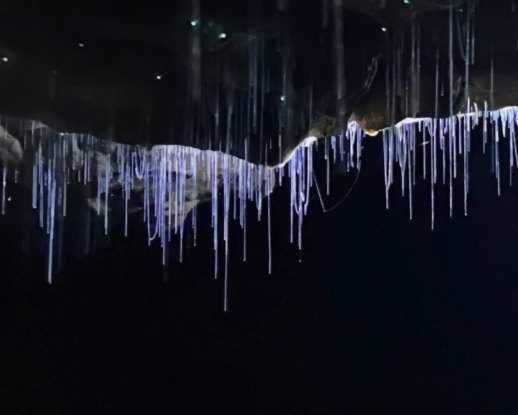
The blue-green light, and what it is for
The light is a chemical reaction happening in the larva's rear end, and it is blue-green — the colour insects fly towards. That is the entire point of it. In the dark of a cave a hungry midge, emerging from the stream below, reads the ceiling as open sky and flies up.
A hungrier larva glows brighter. That is the closest thing to a rhythm the display has, and it is why a chamber can look denser on one visit than the next without anything having changed about the season, the month or the hour.
The fishing lines
Each larva lowers a curtain of silk threads, sometimes dozens of them, beaded along their length with sticky droplets. An insect drawn to the light flies into the curtain and sticks. The larva hauls the line up and eats what is on it.
The lines are the part people do not expect. In the photographs from the caves where cameras are allowed, they hang below the lights like fine rain, and in the beam of a guide's torch they are the most alien thing in the cave.
Still air matters. The threads only work if nothing moves them, which is why the densest displays sit above water and out of any draught, and why the grotto over the stream is the chamber the boat goes to.
The life cycle, stage by stage
The glowing stage is much the longest, which is fortunate for anyone who has bought a ticket. The adult, when it finally arrives, has no mouth.
| Stage | What it does | Does it glow? |
|---|---|---|
| Egg | Laid on the cave roof, in clusters | No |
| Larva | Spins a mucus hammock and its silk lines, feeds, grows — much the longest stage | Yes, and this is what you see |
| Pupa | Hangs from a thread while it rebuilds itself | Faintly |
| Adult gnat | Has no mouth, does not feed, mates and lays | Briefly |
Durations are the broad stages of the animal’s life cycle rather than figures any operator publishes for a particular cave.
Why the cameras stay in the bag
The show cave bans photography outright, and the reason is published in the booking notes: the glowworms react to a flash by switching off, and take about two hours to come back to full brightness. That is not a rule about queue management. One flash can empty the ceiling for every boat behind yours.
The ban covers phones and action cameras as well as cameras, and one operator asks that they are left on the bus entirely. The practical consequence is worth stating plainly: whatever you remember of the Grotto is what you will have.
Where you can photograph them instead
Two options here allow it. Ruakuri Cave permits cameras along its 90-minute walk, and the twin-cave day trip is the tour that reaches it. The Spellbound tour also permits photography in its own caves. Neither is a substitute for the boat under the Grotto; they are a different visit that happens to allow a lens.
The tour that lets you photograph them
Ninety minutes in Ruakuri with a camera in your hand, after 45 minutes in the show cave with it in your bag.
What the guides point out
Guides in the show cave are working in the dark with a hand lamp, and the things they stop for are the things you would walk past. The threads, first: shone from the side they resolve out of nothing. Then the difference between a dense patch and a sparse one, and what that says about how much food is coming up off the water.
They will also tell you when to stop talking. The last stretch of the Grotto is done in silence with the lamp off, and the reason is not reverence — sound and light both carry, and the point is to see the ceiling as the cave has it.
Can you take photos in the Waitomo Glowworm Caves?
No. Cameras and GoPros are not permitted inside the Glowworm Cave. One operator explains why on its own listing: the glowworms react to a flash by switching off, and take about two hours to come back to full brightness. Photography is allowed in Ruakuri Cave and at Spellbound.
Is there a Waitomo Caves night tour?
No. The show cave runs daytime timed departures and closes in the late afternoon, and no operator here sells a night tour. It makes no difference to what you see: the grotto is in complete darkness at every hour, which is why the glowworms read as a night sky at eleven in the morning.
Do glowworms glow more brightly at some times of year?
No operator here makes that claim, and none of the listings varies its departure pattern by season. The cave holds a steady temperature year round, which is the condition the glowworms live in.
Can I see glowworms without going into a cave?
Not on any tour listed here. Every glowworm on these itineraries is inside a cave, reached on foot and, in the show cave, by boat.
See them for yourself
The show cave ticket is the cheapest way under a glowworm ceiling, and it takes 45 minutes.